
Ambient Music piece. Influenced by seeing bunches of frozen berries encased in frost and waiting for the sun.
Author: Clive
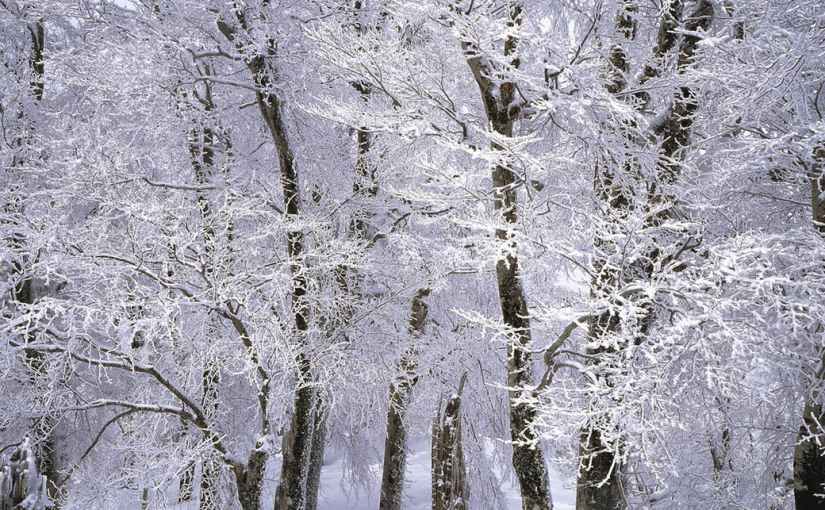
Snowfall
Snowfall in the New Forest is magical and quite rare these days, but it still does happen on occasions. In this piece, and following a walk out in the snow, I tried to reflect in music, the soft caress of snowflakes landing on the trees and the forest floor.

A Pillow of Clouds
Have you ever laid on your back in a quiet natural environment on a summer’s day and looked up at the clouds drifting by? I think that they’re endlessly fascinating. I remember thinking how they sometimes resemble soft pillows and set about trying to compose something to reflect that with this work that also features some backwards sound elements.
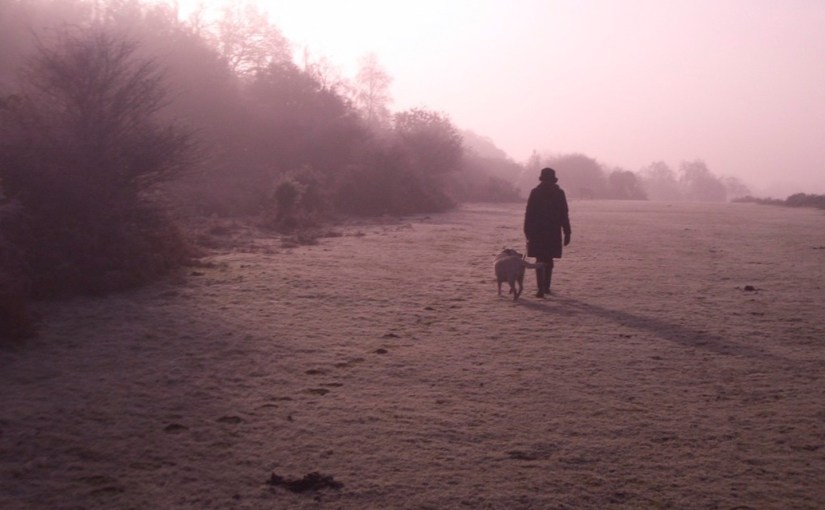
Mist Over the Moor
It’s a new morning, and we’re on Whitfield Moor. It’s a huge, flat expanse of grass where ponies are quietly grazing in the early morning. The first light of the sun is creating a soft, pink light today and a low mist is hanging suspended in the still air just above the grass, in thin wispy lines as the sun filters magically through it. It’s ethereal… and kind of melancholy too. Stay for a while and experience ‘Mist on the Moor’…

The County Show 1
An electronic concerto for six country pursuit commentators, stationary engine and analog step-sequencer. The source field recordings used in this work were captured at The New Forest and Hampshire County Show in July 2015, Brockenhurst, Hampshire, England.
Six manipulated commentaries revolving around country pursuits comprising log cutting, showjumping, hunting, dog handling, cattle and sheep competitions form the basis of the composition. The rhythmic percussion underpinning the piece is generated from field recordings of small, stationary agricultural engines (including the RA Lister and the Wolseley) produced in the early 20th Century.
This differs from The County Show 2, as this version doesn’t have any of the musical elements. It’s built from just the field-recorded sounds this time.

Dawn Rechorused
A sound art composition, Dawn Rechorused takes a recording of the dawn chorus running initially at normal speed. Then, as the piece progresses, the birdsong gets slower. First to 1/2 then 1/4 then 1/8 of the original speed using imperceptible crossfades. I think it’s amazing how the birdsong changes. When it gets really slow it sounds almost tropical.
It serves to show the fascinating melodic variations of garden birds. The more the original is slowed down, the more varied and unusual the bird’s melodies become. Things that can’t be distinguished at normal speed become clear. Although it’s old-fashioned, slowing down analogue reel to reel tape in this way presents a much more organic and natural quality than trying to slow down modern digital recordings.

Ripples
A gentle ambient music piece that combines a forest stream with a soft Fender Rhodes electric piano composition. This was recorded on a pair of linked, vintage valve Brenell and Ferrograph, early 1960’s tape recorders connected together by a loop of tape to form a time lag accumulation tape delay (a technique from the world of 1960’s experimental tape music). The intention here was to try to create music to capture the way that ripples in the forest stream sparkle and dance in the morning sunlight.

Springtime
This soundscape recording captures Springtime in The New Forest, with a bubbling stream, and the sound of a cuckoo and woodpecker adding to the woodland ambience.
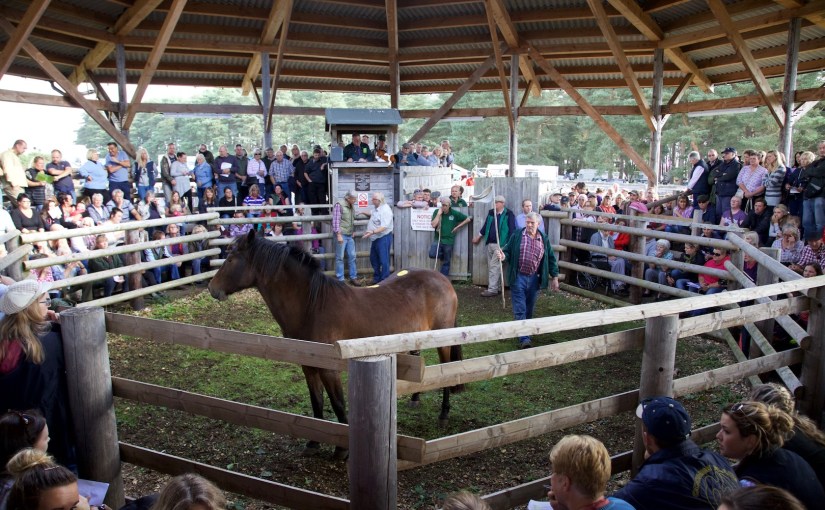
Ponysales
A Sound Art composition created from raw material recorded at the Autumn Beaulieu Road Pony Sales. The idea was to create an organic piece that features the commoners, the sound of the ponies and the auctioneer, but compose it so that it has some unusual “listen again” elements, such as the modification of the auctioneer’s patter into a rhythmic pattern.
The Beaulieu Road pony sales yard is located on the Lyndhurst to Beaulieu road about three miles from Lyndhurst. The main pony sales occur late in the year there. All the New Forest ponies are rounded up by Agisters and commoners, taken off the Open Forest, counted and then health checks and necessary treatments given. The pony sales that occur soon afterwards provide the animals owners, (known as New Forest Commoners) the chance to sell their livestock, or to purchase more.

Brock Hill in Rhythm
Sound Art Composition
A rhythmic sound art piece produced from natural sounds recorded at Brock Hill, Rhinefield Ornamental Drive, Brockenhurst in The New Forest.
 New Forest Sounds